


Reassembling a Roman hull from hundreds of fragments: the Iulia Felix project
Pubblicato nella lista di discussione FAIC (Foundation for Advancement in Conservation)
Project background
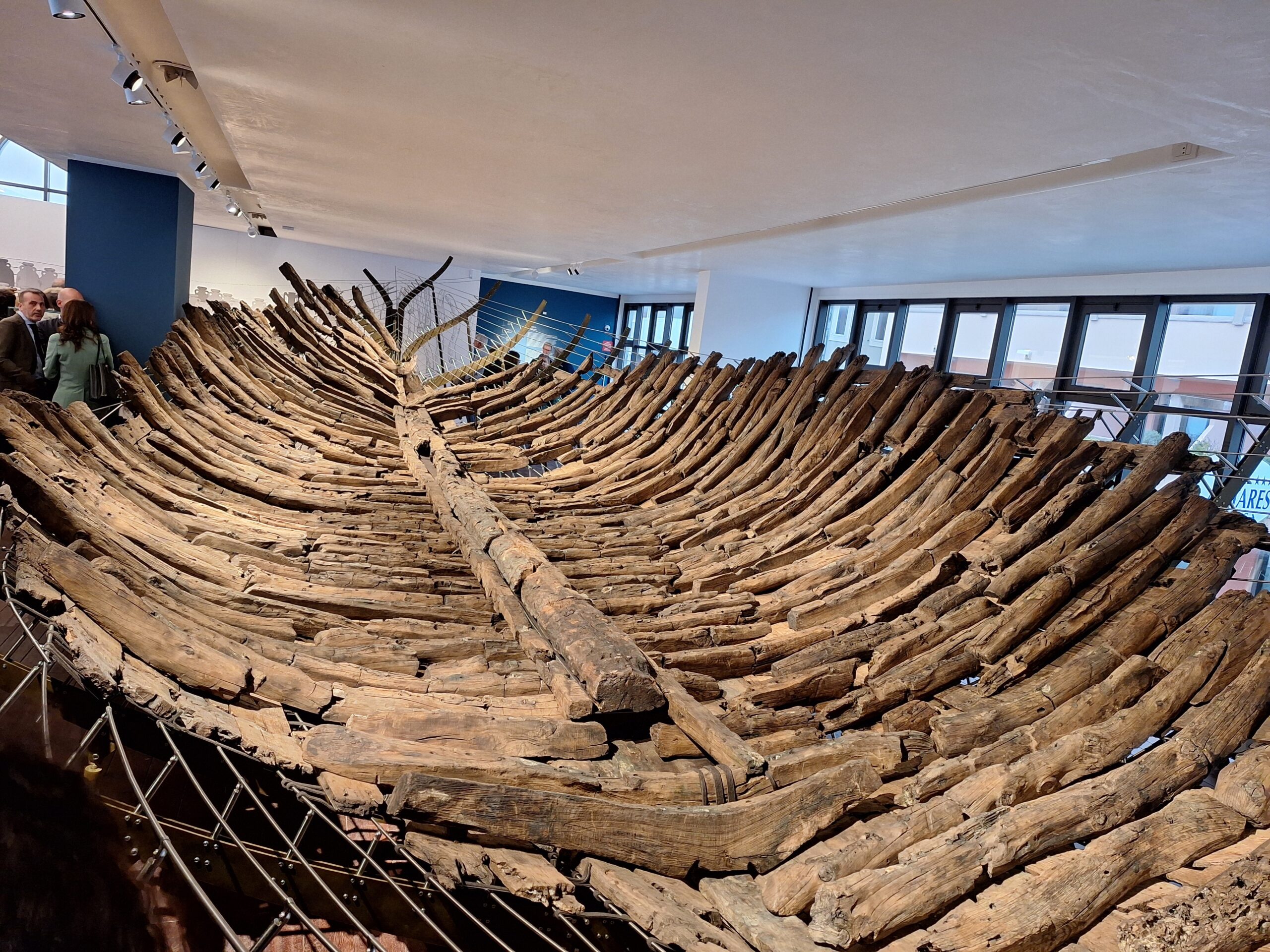
The ship was originally recovered about thirty years ago, and the surviving elements had undergone different phases of treatment and storage. The current museum team launched a comprehensive reassessment to stabilize, document, and reconstruct the material.
Condition and preparation
The hull survived as hundreds of fragments, in some cases dozens for a single plank (one element contained around 90). Many surfaces were still covered by thick PEG residues, so I developed an adapted cleaning method using controlled steam combined with mechanical action to safely expose the wood.
All fragments were fully re‑catalogued, documented, and reorganized to prepare for reconstruction.
Reconstruction process
Using 1:1 overlays of the original planking, we matched and reassembled the elements. I acted as the technical link between the different specialists involved – archaeologists, conservators, and the engineer/architect responsible for the support – ensuring that documentation, interpretation, and physical assembly remained aligned.
Conservation treatments
Over 2024–2025 we carried out:
- final cleaning of PEG residues
- identification of missing pieces among dispersed fragments
- structural joins using epoxy resin
- gap‑filling and edge stabilization
- preparation of elements for mounting
Mounting and interpretation
During assembly, some initial hypotheses were refined as new correspondences emerged. Working with the architect and archaeologists, we adjusted the support structure to reflect a more accurate hull geometry while maintaining stability and readability.
Outcome
The reconstructed portion of the Iulia Felix was completed and inaugurated on 18 December 2025. The project offered valuable insights into the challenges of working with long‑stored PEG‑treated wood and with large archaeological structures surviving only as fragmentary elements.
I’d be glad to hear how others have approached similar reconstructions or long‑term PEG treatments.
More information about the vessel and the exhibition can be found on the museum’s website:
Museo Nazionale di Archeologia subacquea dell’Alto Adriatico di Grado
——————————
Simone Morbin
Conservator
Freelance/Private Practice/Self-employed/Independent
Belluno
Italy
——————————